
Table of contents
If you’re ordering custom apparel — for a team, a small brand, an event, or just for yourself — the first real decision isn’t the design. It’s the method: embroidery or screen printing? Both can look fantastic, but they behave completely differently in cost, durability, texture and the kinds of designs they handle well. We run embroidery machines all day, so we’ll be honest about where printing wins too. Here’s the full comparison.
The 30-second verdict
Choose embroidery when you want a premium, textured, long-lasting finish — logos on polos and caps, small chest designs, uniforms, gifts, anything meant to feel high-end. Choose screen printing when you need large, detailed, multi-color artwork across the whole garment, or hundreds of identical pieces at rock-bottom unit cost.
How each method actually works
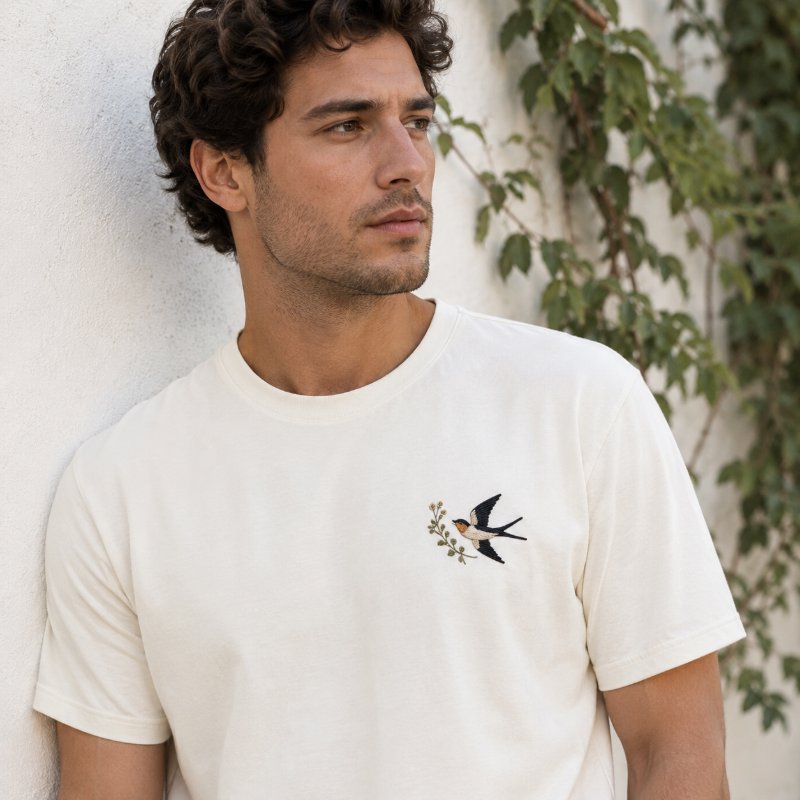
Embroidery stitches the design directly into the fabric with thread. Your artwork is first “digitized” — converted into a stitch file that tells the machine every needle movement. The result is physical: you can run your fingers over it and feel the raised texture.
Screen printing pushes ink through a fine mesh stencil onto the fabric surface, one screen per color. The result is flat, flexible, and can cover huge areas — think full-back band tees.
Durability: embroidery wins, clearly
This is the biggest practical difference. Screen-printed ink sits on top of the fabric, so every wash abrades it a little — cracking and fading typically show after 30–50 washes, sooner with heat drying. Embroidered thread is locked through the fabric itself. Polyester embroidery thread is UV-stable and colorfast; with basic care, an embroidered design routinely outlives the garment. If the piece is a uniform or a gift meant to last years, that alone usually settles the question.
Look and feel: texture vs. detail
Embroidery reads as premium. The raised texture, the way thread catches light at different angles, the slight sheen of satin stitches — it signals craftsmanship in a way flat ink can’t. That’s why corporate polos, luxury streetwear accents and heritage brands lean embroidered.
Screen printing, however, wins on fine detail and photographic artwork. Gradients, tiny text under 4 mm, halftones, and designs with dozens of colors reproduce better in ink. Embroidery approximates gradients with clever stitch direction and blending — our pet portraits push this surprisingly far — but a photorealistic full-color image is printing territory.
Cost: it depends on quantity and stitch count
Screen printing has high setup costs (each color needs its own screen) but tiny per-unit costs. That makes it cheap at volume and expensive for small runs. Embroidery has almost no setup beyond one-time digitizing, and per-piece cost scales with stitch count — a small left-chest logo costs far less to stitch than a full-back design.
- 1–20 pieces: embroidery is usually cheaper and has no minimums — this is why we can offer single custom logo tees.
- 20–100 pieces, small logo: roughly comparable; embroidery adds perceived value.
- 100+ pieces, large multi-color art: screen printing pulls ahead decisively.
Design size and placement
Embroidery shines at 5–12 cm designs: left chest, sleeve, cap front, collar accents. Very large embroidered areas get heavy, stiff and expensive — a full-back embroidered piece can exceed 100,000 stitches. Printing is the reverse: it struggles to feel special at small sizes but effortlessly covers A3-sized areas. Many of the best custom garments combine both: embroidered logo on the chest, printed art on the back.
Fabric compatibility
Embroidery works on almost anything stable: cotton tees, heavy hoodies, denim, canvas, caps, beanies, workwear. It’s the only good option for structured caps and thick fleece, where prints crack over seams. Screen printing prefers smooth, flat surfaces and can struggle with heavy textures. Very thin, stretchy performance fabrics are the one place embroidery needs care (proper backing prevents puckering) — a good studio handles this in digitizing.
Environmental notes
Embroidery uses no inks, solvents or wash-out chemicals — just thread and fabric, with tiny material waste. Traditional screen printing involves emulsions and cleanup chemistry (water-based inks improve this). If you’re building an eco-positioned brand, embroidery is the easier story to tell honestly.
Comparison table
| Embroidery | Screen printing | |
|---|---|---|
| Durability | Excellent — outlasts the garment | Good — fades/cracks over time |
| Feel | Raised, textured, premium | Flat, flexible |
| Fine detail & gradients | Limited | Excellent |
| Small runs (1–20) | Cheap, no minimums | Expensive (setup costs) |
| Large runs (100+) | Cost scales with stitches | Cheapest per unit |
| Best placements | Chest, sleeve, caps, patches | Full front/back designs |
| Caps & heavy fabrics | Ideal | Poor |
So which should you pick?
Ask two questions. How long should this last? If the answer is “years,” embroider it. How big and detailed is the art? If it’s a poster-sized graphic with gradients, print it. For logos, names, mascots, small illustrations and anything worn as identity — teams, companies, clubs, gifts — embroidery gives you the durability and the premium feel at any quantity, starting from one piece.
Curious what your design looks like in thread? Send it to us — we’ll digitize it and send back a free stitch preview before you pay for anything beyond the order itself. And if we think your artwork would honestly work better printed, we’ll tell you that too.